
UMM Live — your workshop platform

Live workshops — join from anywhere in SA

distinction-level STEM facilitators — live, rigorous, online
Semester 1 exams are approaching. The jump from matric to first-year university mathematics is steeper than most students expect. It hits in Week 2. UMM closes the gap — with distinction-led live workshops mapped precisely to your UP module, distinction-level moderation 7 days a week, and past-paper-mapped sessions built around what UP’s examiners actually test.
Every UMM UP workshop is mapped to UP’s published first-year STEM syllabus — not generic university mathematics. Five core UP modules. All high-stakes. Every session built around what UP’s examiners actually test. Each module includes 8 live distinction-level workshops per month, plus full Academic Community access with distinction-level moderation 7 days a week.
UMM UP is built specifically for students in UP’s two major STEM faculties — the Faculty of Engineering, Built Environment & Information Technology (EBIT) and the Faculty of Natural & Agricultural Sciences (NAS). Every workshop is mapped to the module your examiner wrote, not a generic university syllabus. Our facilitators are UP Honours and Masters graduates who have sat the same Tuks papers your students are writing.
Not pre-recorded video. Not passive content. Every workshop is a 60-minute, past-paper-mapped session led by a distinction-level STEM specialist who knows your UP module — followed by distinction-level moderation in the UMM Academic Community 7 days a week. Questions posted overnight answered by 9am the following morning.
| Time | Phase | What happens |
|---|---|---|
| 10 min | 🔬 Anatomy | Deconstruct the problem to first principles. The examiner’s patterns identified. Where do UP students characteristically break down in WTW 114, WTW 152 or WST 111 — and why? |
| 15 min | ⚙️ Drill | Live solution, step-by-step. Every decision narrated. Common errors surfaced and corrected in real time. Mapped directly to UP past-paper questions. |
| 25 min | ✅ Close | You solve, we mark. Exam-equivalent pressure. Competency demonstrated, not assumed. No surprises in the exam hall. |
| 10 min | 💬 Open Forum | Your questions from the Academic Community — the highest-voted problems from enrolled students answered live. |
We do not lecture. We facilitate transformation.
Most supplementary learning is passive, generic and disconnected from your actual degree. UMM is built around UP’s real syllabi, live distinction-level expertise, and a moderated peer community that learns together. The students who pass WTW 114 are not those who studied harder — they are those who understood it differently.
A moderated academic forum — module-specific, facilitator-supervised, built for UP first-years. Post problems, share solutions, learn from every cohort member’s questions. distinction-level moderators active 7 days a week. Questions posted overnight answered by 9am.
The students who thrive at UP are rarely those who study in isolation. The UMM Academic Community creates the conditions for cross-fertilisation of ideas — a cohort of first-years learning the same WTW modules, supported by the same facilitator team, growing together through the same exam pressures.

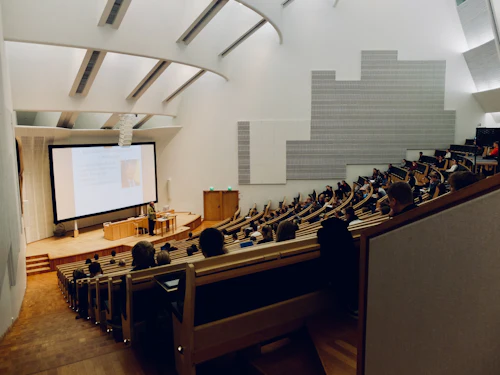

UMM brings together three tiers of academic expertise — Senior STEM graduates with substantial teaching records, Masters candidates embedded in South Africa’s research environment, and Honours graduates who recently navigated the same first-year transition your students face now. A fourth tier of undergraduate peer moderators, supervised by the academic team, supports the community forum.



Full academic team profiles and credentials will be published upon programme launch.
Every module begins with a free trial workshop — no payment details required. Experience the full UMM method before you spend a rand. When you are ready to continue, choose the tier that fits your semester.
No payment required.
Students are our primary focus. UMM also provides structured pathways for parents, a curated Panel of Facilitators, an Affiliate programme open to all UP students, Junior Moderator roles for Year 2+ undergraduates, Campus Associate positions and a Society Partnership programme.
If your question is not answered here, WhatsApp us on WhatsApp Business: +27 61 009 5548 and we will respond within the hour.
UP’s first year is designed to challenge you from Week 2. The students who thrive are those who build understanding in real time — not those who try to catch up in Week 8.
Every module begins with a free trial workshop — no payment details required. Or WhatsApp us before you decide.